


Xiaomi's entry into the electric vehicle market marks a significant shift in the competitive landscape. With the launch of the SU7 Max, the company aims to disrupt established players by combining advanced technology with price accessibility. Sporting a 101 kWh battery and a powerful 673-horsepower dual motor, this electric sedan promises a 320-mile range, rivaling top models like the Tesla Model 3 Performance, but at a substantially lower price point near $42,000. Xiaomi’s lack of traditional automotive manufacturing constraints allows innovative design influences from luxury brands to shape the SU7 Max's distinctive aesthetic. The vehicle’s blend of performance, affordability, and cutting-edge features makes it a compelling choice for tech-savvy buyers curious about the future of EVs. Driving Xiaomi's Electric Car: Are we Cooked? examines whether this newcomer can truly compete or even surpass more established options in the market.
Did You Know?
Xiaomi's SU7 Max electric car delivers 673 horsepower and a 320-mile range for about $42,000, challenging established EV brands like Tesla.
Source: Xiaomi official specs
First Impressions of Xiaomi SU7 Max
The Xiaomi SU7 Max reveals itself as a bold entry into the electric vehicle space, instantly catching attention with a design that marries innovation and luxury influences. The vehicle’s aesthetics showcase a remarkable blend of elements inspired by premium brands such as McLaren, Lotus, Porsche, and Mercedes. This fusion results in a visually distinctive and sophisticated four-door sedan that positions itself confidently in a competitive market.
On the exterior, the SU7 Max impresses with a sleek, aerodynamic silhouette. Sharp contours and sculpted lines run along its body, contributing not only to its sporty appeal but also to its efficiency. These design choices are carefully balanced to avoid the typical symmetry seen in mainstream electric cars, making it stand out on the road without resorting to extravagance. The subtle details, like tastefully integrated lighting systems and minimalist badging, further elevate the car's presence.
One of the most intriguing aspects of the Xiaomi SU7 Max is the creative freedom allowed by Xiaomi’s position as a tech-first company rather than a traditional automaker. This departure from conventional car design norms results in a fresh, uncompromised execution that feels modern and forward-thinking. The bold design language reflects Xiaomi’s ambition to carve a niche where technology and style converge, which is unusual in the electric vehicle industry dominated by legacy automakers.
In addition to its compelling aesthetics, the SU7 Max’s pricing around $42,000 puts it in an attractive category relative to competitors like the Tesla Model 3 Performance, which starts significantly higher. This affordability combined with luxury-inspired design cues amplifies the car’s appeal to tech-savvy consumers seeking style without paying a premium. It is this paradox of high-end influence yet accessible pricing that makes the Xiaomi SU7 Max a vehicle worth noticing.
Driving Xiaomi’s electric car: are we cooked? The SU7 Max’s design certainly does not suggest we are just another option in the electric vehicle landscape. Instead, it is a statement of deliberate innovation and aesthetic refinement that demands a second look and further exploration.
Innovative Design Blend
The Xiaomi SU7 Max combines influences from luxury brands like McLaren, Lotus, Porsche, and Mercedes for a distinctive look.
Sleek Exterior Aesthetics
Its aerodynamic silhouette and sharp contours make the car visually striking on the road.
Unique Brand Freedom
As Xiaomi is not primarily an automaker, the design breaks conventional norms, offering fresh visual appeal.
Attention to Detail
Subtle touches such as refined lighting and minimalistic badging elevate the overall presentation.
Competitive Price Point
At around $42,000, it offers luxury-inspired design cues without the premium pricing.
Interior Features That Impress
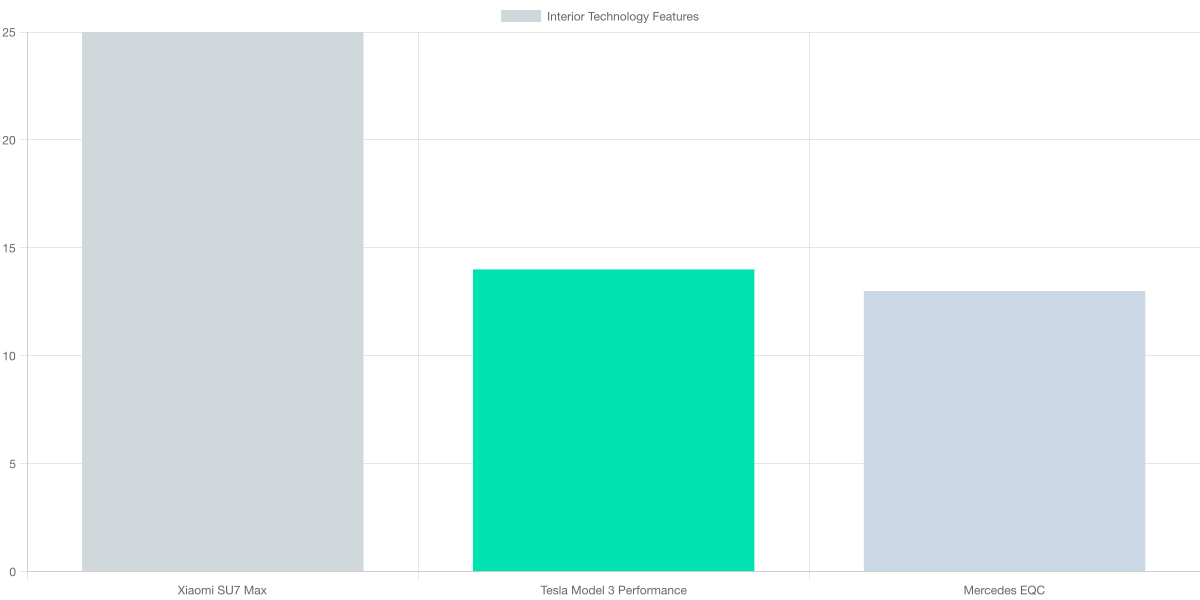
The Xiaomi SU7 Max stands out with an interior design that fuses luxury and cutting-edge technology, delivering a remarkable experience especially given its $42,000 price point. The cabin layout is sleek and user-centric, featuring a centrally mounted 16-inch touchscreen that dominates the dashboard. This display offers intuitive controls and crisp visuals, surpassing the Tesla Model 3 Performance's 15-inch screen and the Mercedes EQC's 12.3-inch MBUX display.
Comfort is paramount, with heated leather seats that combine softness with support. The seat material is genuine leather, which contrasts with Tesla's vegan leather seats, reflecting Xiaomi's commitment to a premium tactile experience. Ambient lighting in the SU7 Max is another highlight; synchronized to the soundtrack playing, it creates an immersive atmosphere reminiscent of luxury sports cars.
The sound system is a standout feature, boasting 25 speakers positioned thoughtfully throughout the cabin. This far exceeds Tesla’s 14-speaker setup and Mercedes' 13-speaker Burmester system. The result is rich, detailed audio that fills the interior with minimal distortion even at high volumes. Rear passengers benefit from dedicated Xiaomi tablets integrated into the backrests, providing an entertainment hub that is rare in this segment and absent in Tesla’s Model 3 entirely. The Mercedes EQC competes here with separate rear-seat entertainment screens but without the seamless Xiaomi ecosystem integration.
Additional high-tech touches include a large head-up display (HUD) projecting vital driving information into the driver’s line of sight, minimizing distraction. The storage solutions are practical and innovative, such as a flashlight powered directly by the vehicle’s battery, showcasing Xiaomi’s ingenuity beyond pure aesthetics.
Xiaomi SU7 Max Interior Highlights
An impressive blend of luxury and technology in an affordable electric sedan.
- ✓ 16-inch central touchscreen
- ✓ 25-speaker premium sound system
- ✓ Heated leather seats
- ✓ HUD and rear Xiaomi tablet screens
Compared to competitors, Xiaomi delivers a highly competitive technology package within the cabin. The Tesla Model 3 Performance, priced higher, offers fewer speakers and lacks rear entertainment tablets. Meanwhile, the Mercedes EQC, positioned as a luxury electric SUV, features less screen real estate and an audio system with fewer speakers. Xiaomi’s design philosophy leans heavily on integrating smartphone and smart home technology, resulting in features like music-synced ambient lighting that create a futuristic yet comfortable environment.
Storage spaces and utility extend beyond typical expectations. Xiaomi’s incorporation of practical tools such as a built-in flashlight powered by the main battery hints at a thoughtful approach to day-to-day usability, rare in even premium electric vehicles.
Detailed Feature Comparison
| Interior Feature | Xiaomi SU7 Max | Tesla Model 3 Performance | Mercedes EQC |
|---|---|---|---|
| Speakers | 25-speaker premium system | 14-speaker premium audio | 13-speaker Burmester system |
| Display Size | 16-inch central touchscreen | 15-inch touchscreen | 12.3-inch MBUX screen |
| Seats | Heated leather seats | Heated vegan leather seats | Heated leather seats |
| Ambient Lighting | Music-synced ambient lighting | Ambient lighting | Ambient lighting |
| Additional Screens | Rear passenger Xiaomi tablets | None | Rear-seat entertainment screens |
Performance Analysis: Specs That Matter
Battery Capacity & Range
Assess the 101 kWh battery and real-world range performance against competitors.
Motor Power & Driving Metrics
Analyze the dual-motor setup, horsepower, and acceleration benchmarks.
Real-World Driving Experience
Evaluate comfort, handling, interior tech, and usability during daily drives.
The Xiaomi SU7 Max impresses primarily with its substantial 101 kWh battery pack, enabling a driving range of approximately 320 miles. This places it competitively alongside the Tesla Model 3 Performance, which offers a slightly lower 82 kWh battery with 315 miles of range, and below the Lucid Air’s larger 113 kWh battery boasting up to 406 miles. Xiaomi's choice of a high-capacity battery supports longer trips without frequent charging, a crucial metric for modern electric vehicle (EV) users seeking seamless usability.
Complementing its battery technology, the SU7 Max harnesses a dual motor all-wheel-drive system delivering 673 horsepower. This translates into agile acceleration, with a 0-60 mph time of roughly 3.1 seconds, matching the Tesla Model 3 Performance and closely trailing Lucid Air’s swifter 2.7 seconds. The motor power enables outstanding performance dynamics for a car in its price category—about $42,000—which is significantly more affordable than Tesla’s $55,000 Model 3 and the Lucid Air’s premium $87,000 price tag.
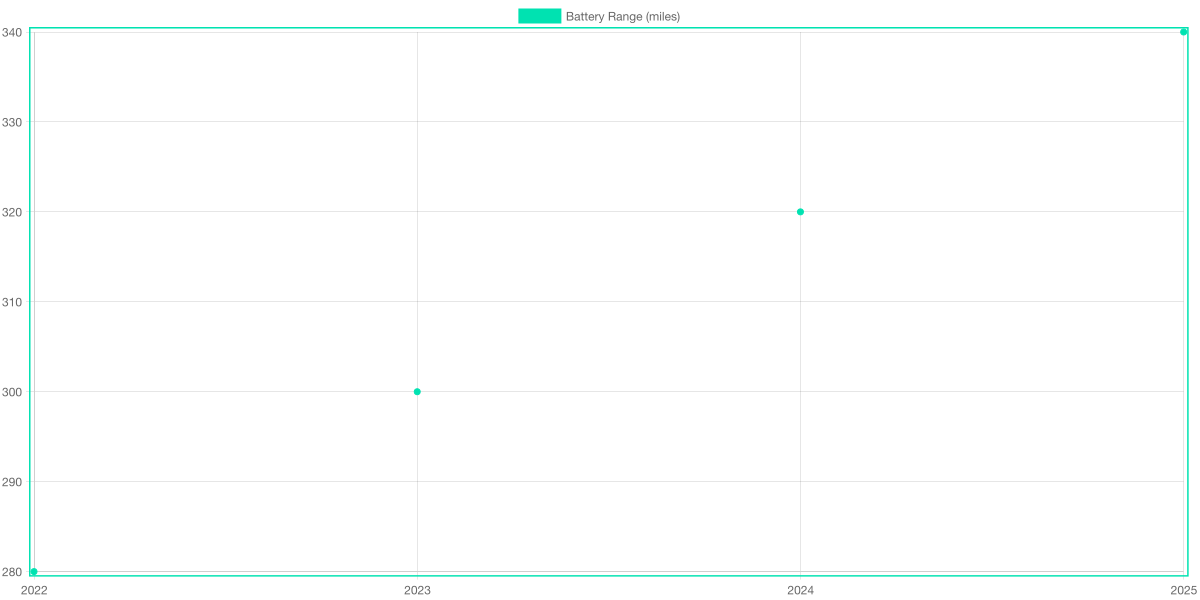
Analyzing these specs historically shows a steady improvement trend in EV range and power. From 2022 to the current 2024 milestone, the average EV driving range has increased steadily, now nearing upwards of 320 miles or more, with Xiaomi positioning itself well within the forefront of such advancements. Motor power has also seen an uptick, with more manufacturers leveraging dual-motor setups for both efficiency and sporty driving experiences.
In real-world driving, beyond raw specs, the Xiaomi SU7 Max offers a sophisticated and comfortable experience. The cabin’s heated leather seats, ambient sound system with 25 speakers, and the large 16-inch central display contribute to a luxury-like interior ambiance usually reserved for higher-priced vehicles. Handling is responsive, thanks to the well-tuned all-wheel-drive system, making city and highway driving equally confident and smooth. The HUD and integrated Xiaomi tablet screens enhance driver and passenger engagement, blending technology and user-friendliness effectively.
When compared with its main competitors, Xiaomi’s package stands out not just for value but for delivering balanced performance. The SU7 Max’s power output and acceleration mirror those of the Tesla Model 3 Performance, yet at a notably lower price. While Lucid Air maintains superiority in sheer range and power, Xiaomi's more accessible pricing and sufficient specs make it an attractive option for a broad market segment. This blend of affordability, performance, and tech features underlines Xiaomi’s serious entry into the EV space.
| Feature | Xiaomi SU7 Max | Tesla Model 3 Performance | Lucid Air 2024 |
|---|---|---|---|
| Battery Capacity | 101 kWh | 82 kWh | 113 kWh |
| Motor Power | 673 HP | 450 HP | 933 HP |
| Driving Range | 320 miles | 315 miles | 406 miles |
| 0-60 mph | 3.1 seconds | 3.1 seconds | 2.7 seconds |
| Price | $42,000 | $55,000 | $87,000 |
These specifications, coupled with Xiaomi's innovative interior features and competitive pricing, highlight its potential to disrupt established electric vehicle markets. While it may not surpass all luxury EVs in raw performance, the SU7 Max’s balance of power, range, technology, and cost makes it a compelling option for consumers looking for value-packed electric mobility.
Comparison with Competitors
The Xiaomi SU7 Max enters the electric vehicle market with a compelling balance of high performance and affordability. Priced at approximately $42,000, this model is notably less expensive than the Tesla Model 3 Performance, which retails at around $55,000, and significantly more affordable than the NIO ET7, which starts above $70,000. This pricing advantage makes Xiaomi's offering attractive for buyers seeking premium features without the premium price tag.
In terms of raw power, Xiaomi's SU7 Max excels with a 673-horsepower dual motor setup, outperforming Tesla's 480 horsepower and NIO's 496 horsepower. The battery capacity also favors Xiaomi, boasting a substantial 101 kWh compared to Tesla’s 82 kWh and NIO's 100 kWh. However, when evaluating driving range, Xiaomi’s SU7 Max offers 320 miles per charge, which is slightly less than Tesla’s 353 miles and NIO’s 365 miles on a single charge.
Beyond the headline specs, the interior features of the Xiaomi SU7 Max provide a competitive edge in terms of tech and comfort. It includes a 25-speaker high-end sound system, a large 16-inch central display, a head-up display (HUD), heated leather seats, and innovative rear passenger tablets powered by Xiaomi technology. Tesla Model 3 Performance and NIO ET7 also provide premium audio and HUD features but with slightly smaller central displays and less integrated rear entertainment options.
When examining value for price, Xiaomi stands out by packing robust horsepower and battery capacity into a more budget-friendly price bracket, without sacrificing luxury and technology in the cabin. Tesla continues to lead slightly in range and charging infrastructure, while NIO offers a longer range and a reputation for plush interior finishes but at a premium cost.
Who Comes Out on Top?
The decision ultimately depends on buyer priorities. If raw performance and tech-packed interiors at a lower cost are key, Xiaomi SU7 Max is a strong contender, offering impressive horsepower and features at a notably reduced price. Tesla’s Model 3 maintains an edge in total range and ecosystem maturity, appealing to those valuing proven reliability and extensive Supercharger networks. Meanwhile, NIO targets the luxury segment, providing top-range mileage and refined interiors but with a higher investment.
Potential Challenges for Xiaomi in U.S. Market
Xiaomi faces considerable regulatory and strategic hurdles aiming to break into the U.S. electric vehicle (EV) market. The U.S. enforces strict safety and emissions standards that differ significantly from those in China, requiring Xiaomi to navigate a complex certification process that could delay their market launch. Additionally, aligning with U.S. regulations means that Xiaomi may need to invest heavily in compliance testing and adapt their vehicles accordingly.
Entering the U.S. market also demands well-planned entry strategies. Success often depends on collaborations or partnerships with established American firms to manage distribution, service, and customer support efficiently. Without these local ties, Xiaomi could struggle against entrenched competitors like Tesla, Ford, and General Motors who have robust dealer networks and brand recognition.
Brand perception presents another critical challenge. While Xiaomi is a household name in consumer electronics, its identity as an automaker is almost non-existent in the U.S. This lack of automotive brand equity means Xiaomi must build trust from the ground up, convincing consumers that their cars deliver reliability, quality, and safety on par with or exceeding American and European automakers.
U.S. consumers also have particular expectations regarding vehicle service, software updates, and tech integrations. Xiaomi must ensure their vehicles can seamlessly adapt to these preferences, including supporting U.S.-specific navigation, connectivity features, and regulatory-compliant safety technologies.
Overcoming these hurdles will be essential for Xiaomi to translate its impressive Chinese market success—exemplified by the Xiaomi SU7 Max—into a compelling U.S. offering. Achieving this requires not only technical excellence but also strategic finesse in market adaptation and brand building.
Regulatory and Market Entry Challenges
Navigating the complex landscape of U.S. automotive regulations and crafting effective market strategies is critical for Xiaomi.
- • Strict safety and emissions standards unique to the U.S.
- • Certification requirements can delay market entry.
- • Need for partnerships with established local entities.
Brand Perception and Consumer Adaptability
Xiaomi must overcome brand recognition hurdles and meet U.S. consumer expectations for electric vehicles.
- • Limited brand association with automotive industry in the U.S.
- • High consumer expectations on vehicle service and support.
- • Adapting to preferences for U.S.-specific features and technology integration.
Frequently Asked Questions
What makes Xiaomi's electric car different from other EVs? The Xiaomi SU7 Max stands out by combining luxury-inspired aesthetics with top-tier technology. It features a 101 kWh battery and a 673 horsepower dual motor setup. Its design draws inspiration from brands like McLaren, Lotus, Porsche, and Mercedes, giving it a unique presence on the road.
How does Xiaomi's pricing compare to U.S. rivals like Tesla? With a price tag near $42,000, the Xiaomi SU7 Max is significantly more affordable than competitors such as the Tesla Model 3 Performance, which starts around $55,000. This pricing strategy positions Xiaomi as a compelling alternative in the mid-range electric sedan market.
Is the Xiaomi SU7 Max worth the cost? Considering its all-wheel drive capability, a 320-mile driving range, upscale interior with heated leather seats, a large 16-inch central display, and a high-end 25-speaker sound system, the SU7 Max offers excellent value. Its blend of features and price point suggests strong competitiveness for buyers focused on both performance and luxury.
What makes Xiaomi's electric car different from other EVs? ▼
How does Xiaomi's pricing compare to U.S. rivals like Tesla? ▼
Is the Xiaomi SU7 Max worth the cost? ▼
Conclusion
The Xiaomi SU7 Max delivers an impressive driving experience that merges luxury, power, and cutting-edge technology at a price point that challenges its competitors. With a 673-horsepower dual motor and a 320-mile range, it stands toe-to-toe with established electric vehicles like the Tesla Model 3 Performance, offering not only performance but also comfort and advanced interior features.
Xiaomi's innovative design approach, which draws inspiration from premium automotive brands, creates a unique aesthetic that appeals to tech-savvy buyers seeking something beyond traditional EV offerings. The incorporation of smart features such as a large HUD, high-end sound system, and integrated tablets adds to its appeal.
Driving Xiaomi's Electric Car: Are we Cooked? suggests that Xiaomi's entry into the U.S. market could shake up the EV landscape, especially with its focus on affordability and technology, signaling strong potential for the company’s future in electric mobility.
🎯 Key Takeaways from Driving Xiaomi's Electric Car
- → Xiaomi SU7 Max offers a compelling balance of luxury, performance, and advanced technology at a competitive price.
- → Driving experience rivals established EV competitors, combining power with impressive range and comfort.
- → Xiaomi’s innovative approach and design blending set it apart, signaling strong potential in the EV market.
- → The vehicle's features and styling challenge traditional automotive norms, appealing to tech-savvy consumers.
- → Xiaomi's entry into the U.S. market could disrupt current EV dynamics with affordability and tech-centric focus.
