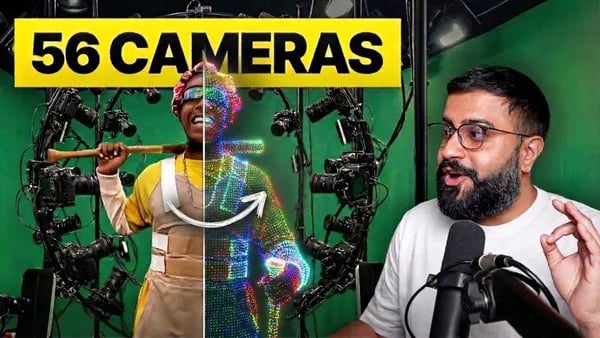


Holographic video is finally here. 4D Gaussian Splats Explained! This groundbreaking technology is revolutionizing how 3D scenes are rendered in real-time. Unlike previous methods, which relied on neural radiance fields with slow rendering speeds, 4D Gaussian splatting utilizes millions of ellipsoidal splats to create photorealistic visuals at unprecedented frame rates. You will learn how this technique, inspired by pointillism, transforms still images into dynamic holographic experiences by incorporating the dimension of time.
This section introduces the core principles behind 4D Gaussian splats and explores their impact on visual media, from movies to music videos. We’ll reveal how advances in GPU processing can deliver over 100 frames per second at HD resolution, enhancing clarity and immersion.
Did You Know?
4D Gaussian Splatting can render over 100 frames per second at HD resolution on a single GPU, a massive leap from previous tech that took seconds per frame.
Source: ENRIA Research, 2023
What is Holographic Video and 4D Gaussian Splatting?
Holographic video represents the cutting edge of visual technology, delivering three-dimensional, lifelike images that can be viewed from multiple angles without the need for special glasses or headsets. Unlike traditional video, which is limited to flat, two-dimensional frames, holographic video creates an immersive experience by reconstructing scenes that occupy real space. This allows viewers to perceive depth and movement naturally, enhancing realism and engagement.
The recent breakthrough powering this innovation is 4D Gaussian Splatting, a novel rendering technique that builds on principles similar to pointillism—where tiny dots collectively form a detailed image—but elevates it into three-dimensional form. Instead of pixels, 4D Gaussian Splatting employs millions of ellipsoidal Gaussians, or "splats," each defined by attributes such as position, shape, color, and opacity. These Gaussian blobs combine to produce photorealistic 3D scenes that faithfully capture the complexities of light and texture.
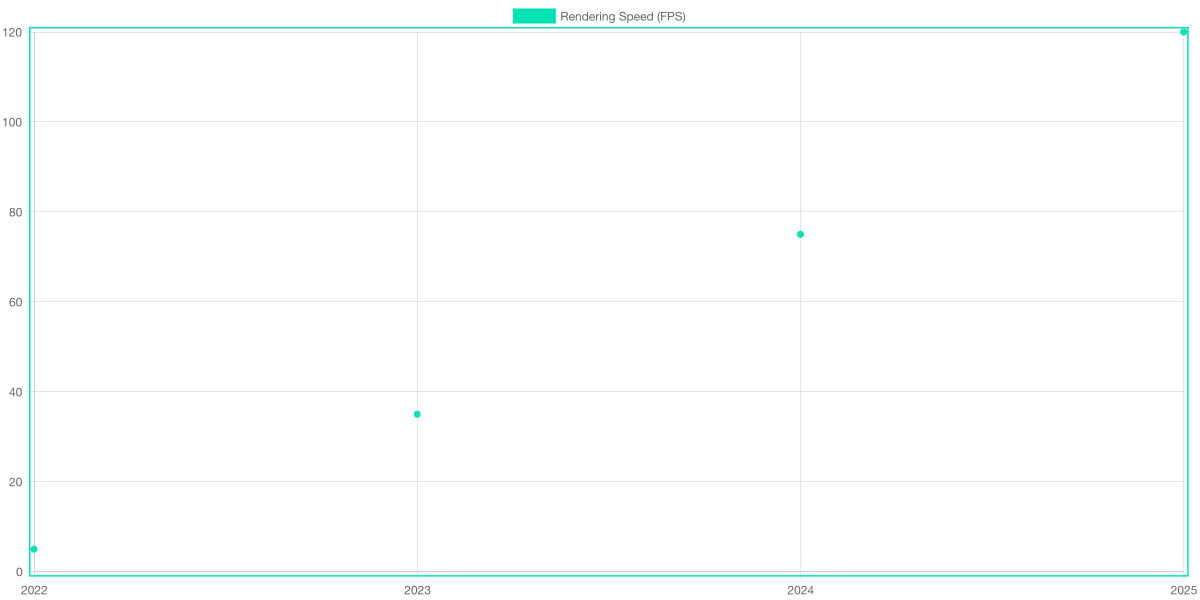
This method originated as an alternative to neural radiance fields ("nerfs"), which had been a standard for creating 3D representations from 2D photos. Although nerfs achieved impressive quality, they were bottlenecked by slow rendering speeds due to their heavy computational volume rendering process. In 2023, a research team from ENRIA revolutionized the approach by bypassing the neural network entirely. Instead, they directly leveraged these 3D Gaussian splats, achieving rendering speeds exceeding 100 frames per second at HD resolution on a single GPU. This leap makes real-time holographic video a practical achievement rather than a theoretical possibility.
The "4D" in 4D Gaussian Splatting refers to incorporating the dimension of time, allowing static 3D images to evolve into dynamic, moving holograms. Conceptualizing this is like a flipbook where each page is a 3D snapshot, collectively creating fluid motion. However, this temporal dimension also presents challenges, particularly in terms of the massive data storage and management required to capture continuous holographic sequences. Despite these hurdles, emerging solutions are already facilitating dynamic holographic productions, as seen in recent projects like the ASAP Rocky music video and commercial rendering engines.
Holographic Video is Finally Here. 4D Gaussian Splats Explained!
Holographic Video
A video format that creates three-dimensional, lifelike images visible from multiple angles without special glasses.
4D Gaussian Splatting
An advanced rendering technique using millions of 3D Gaussian ellipsoids to represent scenes for photorealistic detail.
Position, Shape, Color, Opacity
Each Gaussian blob contains these attributes, enabling accurate recreation of complex 3D visuals.
Faster Rendering Speeds
By bypassing neural networks, rendering can reach over 100 frames per second at HD on a single GPU.
Temporal Dimension Added
The '4D' includes time, allowing dynamic holographic videos instead of static images.
The Evolution from Neural Radiance Fields to 4D Gaussian Splatting
Neural Radiance Fields (NeRFs) revolutionized 3D reconstruction by enabling the generation of photorealistic 3D scenes from a series of 2D photographs. These models rely on neural networks to implicitly represent complex volumetric scenes with fine detail. However, the rendering process in NeRFs is computationally intensive, requiring costly volume rendering steps that often result in frame rates measured in seconds per frame. This limitation delayed their practical use in real-time applications such as interactive holography or live video.
The breakthrough came in 2023 when the research team at ENRIA introduced a novel approach known as 3D Gaussian Splatting. Instead of relying on slow neural network evaluations, this method represents scenes using millions of ellipsoidal Gaussian splats—tiny volumetric blobs—that collectively encode position, color, opacity, and shape. This fundamentally transforms the rendering pipeline from neural volume sampling to a point cloud-based rasterization approach that can be fully accelerated by graphics hardware.
One of the most striking advantages of 3D Gaussian Splatting is the dramatic increase in rendering speed. While traditional NeRF implementations were limited to a handful of frames per second at best, Gaussian splatting can achieve over 100 frames per second at HD resolution on a single GPU. This performance leap opens up new possibilities for real-time holographic video experiences and dynamic 3D content creation, overcoming the latency bottleneck that previously constrained neural-based methods.
However, the initial implementation of Gaussian splatting focused on static scenes. Extending the technology into the fourth dimension—time—presents a new set of challenges. The approach effectively becomes akin to a flipbook where each 3D snapshot corresponds to a frame in time. Managing and processing the enormous data generated by these dynamic splats is a significant hurdle. For example, the production of the ASAP Rocky music video using 4D Gaussian splatting generated over 10 terabytes of raw data, highlighting both the scale and intensity of this next frontier.
Despite these challenges, 4D Gaussian splatting represents the cutting edge of volumetric video technologies. It builds upon the foundation laid by NeRFs but replaces slow, indirect neural evaluations with direct, efficient rendering primitives. The result is a scalable, real-time capable method with strong potential for integration into cinematic productions, advanced commercials, and interactive holographic displays.
The transition from neural radiance fields to Gaussian splatting marks a critical evolution in 3D video technology, combining mathematical elegance with practical speed-ups. As research continues, optimizing data compression and dynamic scene representation will unlock even more compelling applications.
From Neural Radiance Fields to 4D Gaussian Splatting
Explore the transformative journey from slow, complex 3D volume rendering to real-time photorealistic 3D and 4D visualization using productive Gaussian splats.
- ✓ Neural Radiance Fields (NeRFs) for 3D from photos
- ✓ Limitations: slow rendering (seconds per frame)
- ✓ ENRIA's 2023 breakthrough using 3D Gaussian splats
- ✓ Over 100 fps at HD resolution on a single GPU
- ✓ Introducing the 4th dimension: dynamic time in splatting
Real-World Applications and Impact
4D Gaussian Splatting has rapidly moved from cutting-edge research into significant real-world applications across the entertainment industry. One of the most notable implementations was seen in a recent Superman movie, where the technology enabled enhanced photorealistic 3D effects. By representing complex dynamic scenes as volumes of ellipsoidal Gaussians, filmmakers achieved unprecedented realism combined with efficient rendering at high frame rates. This leap allowed more immersive visual storytelling with less computational overhead compared to previous neural radiance field methods.
In music, the ASAP Rocky music video became a landmark project showcasing the potential of volumetric capture enhanced by 4D Gaussian Splatting. This project required processing and managing over 10 terabytes of raw 3D data, reflecting the enormous scale and data complexity of capturing lifelike motion and depth in real-time or near-real-time. The ability to render these enormous data sets at over 100 frames per second on a single GPU hints at transformative production workflows, where artists and directors can now visualize complex scenes instantly, iterating faster and creating novel visual experiences.
Beyond entertainment, commercial rendering engines have started integrating Gaussian Splatting methods to accelerate realistic 3D graphics rendering. These engines benefit from the technique’s balance of visual fidelity and speed, optimizing performance without sacrificing detail. As the technology matures, it is poised to disrupt various sectors including virtual production, augmented reality (AR), and interactive installations where real-time volumetric rendering is critical.
Impact on the Film and Music Industry
The ability to produce photorealistic dynamic scenes at interactive frame rates has a profound impact on film production. Directors and visual effects supervisors can leverage 4D Gaussian Splatting for more realistic previsualization and on-set visualization tools, reducing costly reshoots and lengthy post-production timelines. Hollywood studios experimenting with this technology gain a competitive edge by delivering enhanced visual experiences faster and more cost-effectively.
In the music industry, volumetric videos allow artists to create richly immersive music videos that go beyond flat 2D viewing. Fans can experience concerts and performances from multiple viewpoints or in virtual reality environments, deepening engagement. This technology also opens new possibilities for live virtual performances, where the physical presence of an artist can be convincingly replicated and manipulated in 3D space.
Future Possibilities
Looking ahead, the future of 4D Gaussian Splatting holds exciting potential for immersive media. One emerging direction is combining these volumetric techniques with AI-driven compression and streaming solutions to address the massive data storage and bandwidth challenges. This can enable live, interactive volumetric broadcasts and virtual attendance experiences.
Furthermore, advances in sensor technology and capture methods will likely simplify the acquisition of 4D Gaussian datasets, making the workflow accessible to smaller studios and individual creators. Augmented and virtual reality platforms stand to benefit enormously, as users will be able to explore and interact with highly detailed 3D environments rendered in real-time.
The rapid development and adoption of 4D Gaussian Splatting underscore a significant technological shift, promising to reshape how digital stories are told, experienced, and monetized across various creative industries.
The Technical Challenge of Data Storage
4D Gaussian splatting generates immense amounts of data by capturing millions of ellipsoidal splats per frame that represent photorealistic 3D scenes. When extended into the temporal dimension, each frame becomes a “page” in a 4D sequence, creating a massive volume of data that challenges conventional storage and transmission systems. For instance, the ASAP Rocky music video project produced over 10 terabytes of raw data, illustrating the scale of the problem.
Storing real-time 4D videos requires solutions that balance compression efficiency, read/write speed, and accessibility for rendering. Traditional methods struggle with the sheer data throughput needed to maintain smooth playback above 100 frames per second at HD resolution. Additionally, the data format must support rapid sequential access to facilitate real-time rendering on GPUs.
Current strategies integrate advanced compression algorithms like Zstandard, which offers high compression ratios while maintaining fast encoding and decoding speeds. Storage formats such as Apache Parquet provide structured organization to manage large datasets efficiently but are primarily designed for analytical queries rather than streaming. Meanwhile, NVMe SSDs deliver the high-speed hardware backbone essential for rapid data retrieval, acting as the critical enabler for streaming these datasets in real-time.
Efficiently handling 4D Gaussian splat data involves a multi-step workflow: precise data capture of millions of splats per frame, organizing those into coherent temporal sequences, applying compression to reduce the raw volume, and leveraging powerful GPUs alongside high-speed storage for real-time playback. Each step is crucial to overcoming the technical storage challenges inherent in this groundbreaking video technology.
Workflow for Handling 4D Gaussian Splat Data
Data Capture
Acquire millions of Gaussian splats per frame representing 3D scenes.
Temporal Sequencing
Organize static splat snapshots into a temporal sequence for 4D video.
Data Compression
Apply advanced compression methods to manage massive data volume.
Real-Time Rendering
Optimize GPU usage for smooth playback above 100 FPS at HD resolution.
Data Storage Solutions Comparison
| Feature | Zstandard (Compression) | Parquet (Storage Format) | NVMe SSDs (Storage Hardware) |
|---|---|---|---|
| Compression Ratio | High (2-5x) | Moderate (depends on schema) | N/A - hardware speed |
| Read/Write Speed | Fast | Optimized for analytics | Very High (up to 7 GB/s) |
| Suitability for Real-Time Video Storage | Good for data reduction post-capture | Used for structured storage, less real-time | Excellent for fast access and large datasets |
| Typical Use Case | Compression of large raw data sets | Organizing large datasets for queries | High-speed storage for intensive video data |
| Cost Efficiency | Open source, software-based | Open source, software-based | Higher upfront hardware cost |
Comparative Analysis: Gaussian Splat vs Neural Fields
4D Gaussian Splatting represents a novel leap in 3D rendering technology by utilizing millions of ellipsoidal Gaussian blobs to form photorealistic scenes. This method achieves remarkable rendering speeds of over 100 frames per second at HD resolution on just a single GPU, making it exceptionally efficient for high-fidelity real-time applications. Inspired by pointillism, Gaussian Splatting models objects as collections of glowing ellipsoids rather than relying on neural networks for volumetric rendering. Currently, its main limitation lies in being restricted to static images, but ongoing developments aim to extend it into the fourth dimension — dynamic time-based sequences.
On the other hand, Neural Radiance Fields (NeRFs) have been the predominant choice for AI-based 3D reconstruction from photographs. This technique generates dense volumetric representations by training deep neural networks, resulting in high-quality images albeit with slower rendering speeds measured in seconds per frame. NeRFs require substantial GPU and energy resources, which can impose high costs in production environments. Their volume rendering approach occasionally produces softness in image details, which is less prominent in Gaussian Splatting.
4D Gaussian Splatting
An innovative rendering technique using millions of ellipsoidal Gaussians to create photorealistic 3D scenes at high speed.
- • Rendering speed: Over 100 fps at HD on a single GPU
- • Inspired by pointillism with ellipsoidal splats
- • Currently limited to static images but evolving to 4D
Neural Radiance Fields (NeRFs)
Traditional AI method generating 3D representations from photos with slower volumetric rendering.
- • Rendering speed: Seconds per frame
- • Uses deep neural networks for volume rendering
- • Widely adopted but limited by speed and cost
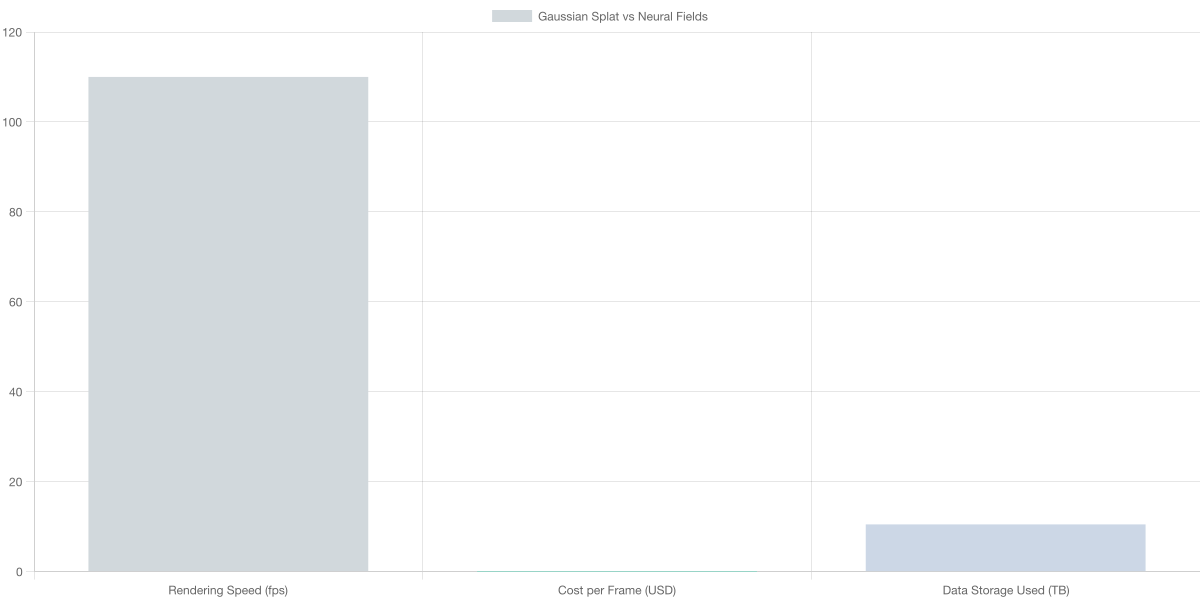
Cost-effectiveness is a significant advantage of Gaussian Splatting. Its low computational demands translate to reduced GPU and energy consumption, allowing faster frame rates at a fraction of the cost incurred by NeRFs. In contrast, NeRFs require more costly hardware resources and longer rendering times, impacting production budgets and throughput, especially for high-resolution video.
Data storage is another factor where these methodologies diverge. Dynamic 4D Gaussian Splatting sequences generate extremely large datasets, often exceeding 10 terabytes, due to the need to capture detailed time-based transformations. NeRFs typically involve storing more moderate amounts of data for static scenes, which simplifies storage but limits temporal fidelity.
| Feature | 4D Gaussian Splatting | Neural Radiance Fields (NeRFs) |
|---|---|---|
| Rendering Speed | Over 100 fps at HD resolution | Typically 1-2 fps or seconds per frame |
| Cost Effectiveness | Low computational cost per frame | Higher GPU and energy costs per frame |
| Image Quality | Photorealistic with ellipsoidal Gaussians | High quality but volume rendering can cause softness |
| Data Storage | High storage for dynamic 4D sequences (~10+ TB) | Moderate storage for static scenes |
| Current Usage | Emerging in film and commercial projects | Established in research and medium-scale productions |
The practical impact of these differences is clear in projects like the ASAP Rocky music video and recent commercial renderings, where Gaussian Splatting dramatically reduces frame generation times while pushing image realism forward. Although the initial data size requirements are substantial, ongoing optimization in data handling promises better scalability. Meanwhile, NeRFs remain a valuable option where slower but flexible volumetric rendering fits production needs.
Frequently Asked Questions
4D Gaussian splatting offers significant advantages over previous 3D rendering methods. It achieves rendering speeds of over 100 frames per second at HD resolution on a single GPU, dramatically faster than neural radiance field (NeRF) techniques. The method represents scenes using millions of ellipsoidal Gaussians, resulting in highly detailed and photorealistic 3D visuals.
This technology improves video rendering by directly utilizing 3D Gaussians instead of relying on slow neural network computations. This approach reduces frame computation times, enabling smoother, dynamic holographic videos suitable for real-time applications such as interactive media and live performances.
Industries poised to benefit the most from holographic video include film production, advertising, music videos, gaming, and augmented and virtual reality. The ability to render intricate 3D content quickly allows creators to deliver richer immersive experiences and innovate in storytelling methods.
What are the advantages of 4D Gaussian splatting? ▼
How does this technology improve video rendering? ▼
What industries will benefit most from holographic video? ▼
Conclusion
Holographic Video is Finally Here. 4D Gaussian Splats Explained! This breakthrough offers photorealistic holographic rendering at unprecedented speeds, transforming industries from film to music videos. ENRINA's 4D Gaussian Splatting implementation exemplifies cutting-edge technology enabling over 100 FPS rendering, outpacing older neural radiance fields.
For enthusiasts and professionals, exploring software options and reviewing case studies—such as the Superman movie and ASAP Rocky video projects—are essential next steps. Equally important is addressing the challenge of storing vast 4D datasets efficiently, a hurdle for widespread adoption. Advancing in these areas promises to unlock the full potential of holographic video technology.
🎯 Key Takeaways
- → 4D Gaussian Splatting revolutionizes holographic video with photorealistic, fast rendering.
- → Next steps include exploring software like ENRINA's implementation and industry case studies.
- → Understanding data storage solutions is crucial due to large-scale 4D datasets.
