


8K memories dazzle with detail, but they also widen the attack surface for privacy breaches. This guide explains what makes high-resolution images a security risk, how biometric data can be weaponized, and why traditional passwords aren’t enough to protect you. You’ll learn where high-res data leaks tend to occur—on social platforms, cloud backups, and shared devices—and practical steps to mitigate exposure. Expect clear explanations, real-world explanations from the Behind the Scams report, and actionable tips you can apply today—Your 8K Photos Are a Security Risk: The High-Res Trap Explained! This introduction also frames how the rest of the guide will dissect risks and lay out protective steps. From device hygiene to platform settings, you’ll gain practical, repeatable habits that reduce exposure without compromising memories at home. Adopting cautious sharing habits protects tomorrow's memories and finances from becoming collateral in digital-value chain. Know rights, audit apps. Protect memories, identities, and futures.
Did You Know?
Biometric identity theft surged by over 300% globally in the past year as hackers used biometric crawlers to reconstruct 8K facial maps from public selfies.
The Rise of Biometric Identity Theft
Biometric data has become a high-value commodity on the dark web. In recent investigations, authorities report biometric identity theft surged by more than 300% globally in the last year, a spike driven by platform storage shifts that preserve subpixel information and by automated biometric crawlers that harvest 8K imagery from public posts. Analysts warn that the more detail available, the more convincing a spoof can be, enabling criminals to bypass multifactor and other verification steps. The growth is not confined to a single region; Asia-Pacific and North America show the steepest increases, fueled by affordable high‑resolution cameras, faster networks, and social platforms that monetize facial data through exposure rather than compression.
Unlike passwords, biometric traits cannot be reset. Facial textures, iris patterns, and even skin micro-details are permanent once captured, meaning a compromised map can be reused across services. The high‑resolution trap exploits this permanence, allowing attackers to recreate dependable 8K maps that challenge liveness checks, trick authentication flows, and gain access to encrypted wallets and critical business accounts. As devices capture increasingly detailed memories, the potential payoff for fraudsters grows alongside the risk for individuals.
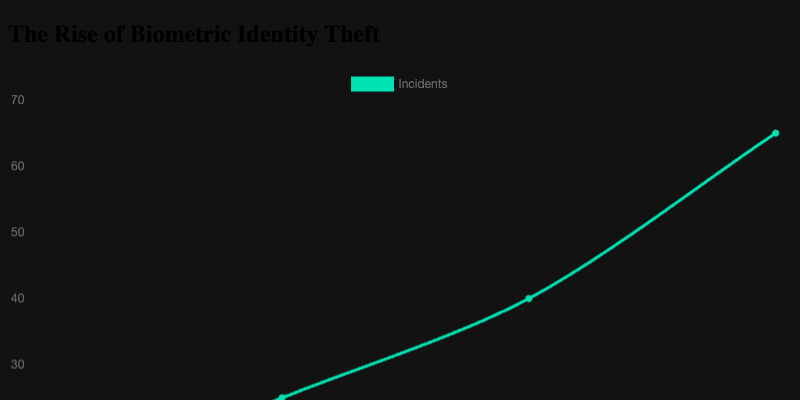
Criminals deploy biometric crawlers that continuously scan public profiles for high‑resolution imagery, assembling intricate facial maps that extend beyond what simple selfies reveal. These maps capture skin texture, pore patterns, and iris micro-details, which can be used to recreate a person’s biometric template on new devices. Attackers test these maps against live checks, and some methods can deceive liveness detectors with sophisticated replay or rendering techniques, enabling unauthorized access without the victim's knowledge. The result is a looping cycle of exposure, extraction, and exploitation that compounds with each new high‑resolution upload.
The impact is felt by individuals and businesses alike. Consumers face immediate financial risk from hijacked accounts, unexpected charges, and damaged credit. For companies, the consequences include higher fraud remediation costs, stricter authentication requirements, and growing regulatory scrutiny as platforms reassess how long they store ultra‑high‑resolution media and what protections accompany those assets.
Defenders are responding with privacy-preserving biometrics, tighter retention controls, and stronger multi‑factor verification. Platforms are urged to balance user convenience with protective measures, while policymakers consider storage standards and template protections that limit reuse or withdrawal of compromised biometric data. Until safeguards mature, users should be mindful of public exposure of ultra‑high‑resolution media and enable robust privacy settings to limit exposure.
Techniques Used by Hackers
High‑resolution memories are more than just pristine pictures; when they are captured at 8K and preserved by platforms that keep subpixel detail, they become fodder for biometric analysis at scale. In 2026, biometric identity theft reports surged by more than 300% globally, underscoring a new threat landscape where memory itself is weaponized. Biometric crawlers—automated bots that roam public profiles—harvest crisp 8K imagery, often from everyday selfies, and feed these assets into algorithms that construct highly detailed facial representations. These maps extend beyond simple facial landmarks to capture skin texture, pore structure, and iris patterns, features traditionally considered stable and hard to change. The result is a dataset capable of supporting sophisticated impersonation or unauthorized access attempts across accounts and devices. Some platforms responded by preserving subpixel data for architectural reasons, inadvertently widening the target for attackers who can translate a collection of 2D images into convincing 3D facial models. The market for such data exists in the shadows: biometric profiles and reconstructed identities fetch significant sums on dark‑web marketplaces, fueling a cycle where getting one 8K portrait can unlock a chain of illicit possibilities. In practical terms, the threat translates into an attacker who doesn’t need to steal a password to masquerade as you; they may exploit your own image footprint to fool verification systems or to seed phishing campaigns with increasingly credible “you.” To illuminate how this plays out in the real world, the following visual and data‑driven snippets illustrate both the attacker’s workflow and a triad of well‑known tools that sit at the center of public discourse about facial recognition. The aim is to connect the dots between everyday photo sharing, high‑fidelity facial models, and the weaknesses that liveness tests strive to defend against. The sections that follow ground these concepts with concrete examples of what hackers are actually doing, and how defenders can map risk to practical protections.
1) Identify 8K Content
Biometric crawlers scan public profiles for ultra-high-resolution images to build a dataset.
2) Build 3D Facial Maps
Algorithms synthesize 8K facial maps from two-dimensional selfies to capture skin texture and iris patterns.
3) Test Liveness Methods
Hackers attempt to bypass liveness detection with video replays, masks, or 3D-printed spoofing artifacts.
4) Elevate Access
Mapped identities target encrypted accounts and financial apps, exploiting weak privacy settings.
| Feature | Clearview AI | PimEyes | Face++ (Megvii) |
|---|---|---|---|
| Data sources | Public web and social media scraping (billions of images) | Publicly available images indexed from the internet | Public datasets plus developer partnerships/licensing |
| Primary use case | Law enforcement/ investigations (varies by jurisdiction) | Public search by individuals | Developer/API-based biometrics for apps and enterprises |
| Access/API model | Enterprise licenses; not a public API | Public-facing search with optional premium features; no open API | Commercial API with cloud services for developers |
| Regulatory status | Facing lawsuits/bans in several regions; ongoing privacy debates | Under privacy scrutiny in the EU and privacy groups; opt-out concerns | Regulatory scrutiny in China and international contexts; data privacy compliance required |
| Privacy/ethics concerns | Privacy invasion allegations; controversy over scraping | Public image scraping raises consent concerns | Biometric data handling and consent considerations |
Comparative Analysis: 8K vs. Other Resolutions
8K delivers unmatched detail and fidelity, but it also heightens the risk surface for biometric data. As resolution climbs, so does the amount of identifiable texture and patterns exposed in photos and videos. The following blocks present a concise, data-informed view of how 8K compares to 4K and lower resolutions in vulnerability, usability, and strategic trade-offs.
8K Detail and Vulnerability
Higher pixel density expands biometric data footprints, increasing exposure for identity theft.
Resolution vs Risk
8K captures more skin texture and iris patterns; 4K captures fewer details but still sensitive.
Trade-offs and Safeguards
Mitigations exist (blurring, selective sharing, compression).

| Feature | 8K (High Detail) | 4K (Mid Detail) | 1080p (Low Detail) |
|---|---|---|---|
| Biometric leakage surface | Very high | High | Moderate |
| Storage and bandwidth | High | Moderate | Low |
| Liveness evasion risk | High | Medium | Low |
| Use cases | Facial mapping, high-fidelity editing | Standard streaming, social sharing | Casual viewing |
Market data from 2026 shows 4K displays dominate the landscape, with an estimated market size around USD 246.52 billion, while 8K stands at roughly USD 10.94 billion. This stark disparity explains why public-facing content largely lives at 4K or below. There is no clear, published global share for “lower resolutions” as a separate category in the same way, so a direct risk-porosity comparison across all low-end formats relies on context rather than a single percentage. The takeaway remains: as 8K adoption grows, the volume of high-detail biometric data available publicly or insecurely also grows, intensifying the vulnerability risk across platforms and users.
In practical terms, 8K offers undeniable fidelity for capturing scenes and features, but it also magnifies face-texture details that attackers could misuse. 4K provides substantial fidelity with a comparatively smaller risk footprint, and lower resolutions reduce some exposure but at the cost of usefulness for personal memories and advanced editing. Communicators should balance the benefits of ultra-high detail with robust privacy controls, selective sharing, and sensible compression to limit unnecessary data exposure.
Tips for Protecting Your High-Res Photos
High-resolution memories can become a vector for crime when shared without safeguards that protect metadata, facial maps, and biometric traces. Hackers exploit 8K details, subtle lighting patterns, and facial data to reconstruct identities from everyday selfies, turning cherished moments into attack surfaces. By tightening uploads and privacy settings, you preserve memories while limiting exposure on social platforms. Regular audits of your privacy controls are essential as platforms rename features and adjust default visibility.
Limit Uploads and Metadata
Reduce exposure by controlling what you share and stripping sensitive data from images before posting.
- • Disable high‑resolution backups for 8K files in Google Photos and iCloud
- • Strip EXIF data (location, camera, and settings) before public sharing
- • Prefer 2–4K previews instead of full 8K originals for social feeds
- • Watermark or blur key details on especially private memories
Strengthen Social Media Privacy
Configure profiles and permissions to minimize exposure; disable facial recognition features where offered.
- • Set Instagram, Facebook, and X accounts to private
- • Turn off facial recognition tagging if supported by the platform
- • Revoke third‑party app access to photo libraries
- • Audit and delete old 8K uploads from public timelines
Stay vigilant about metadata when sharing. Encrypt backups and consider offline storage for the most sensitive memories.
Frequently Asked Questions
What is the high-res trap? ▼
How can I protect my digital photos? ▼
What are the indicators of biometrics misuse? ▼
What steps can I take if I suspect misuse? ▼
Conclusion
Your 8K imagery offers cherished memories but can be weaponized. The report Your 8K Photos Are a Security Risk: The High-Res Trap Explained! frames these stakes, noting biometric theft surged over 300% worldwide and that high‑res data often cannot be revoked.
To reduce risk, tighten privacy controls and modify sharing habits. Adopt practical steps: enable two‑factor authentication, use hardware security keys, and disable automatic uploads of high‑resolution images where possible. Regularly review biometric data policies of services you use.
🎯 Key Takeaways
- → High‑res data amplifies risk: biometric identity theft has surged over 300% globally; 8K memories are hard to revoke once compromised.
- → Be selective about platforms preserving subpixel data and facial imagery; review privacy settings and opt out where possible.
- → Adopt practical security habits: disable automatic uploads of RAW/high‑res photos, enable two‑factor authentication, use hardware security keys, and routinely audit biometric data usage policies.
